August 3
The Bramford Offer
[Rosemary Woodhouse and Guy Woodhouse](entity:relation-recall-relation-rosemary-woodhouse-a-59a01119c10b) are preparing to move into a modern apartment when an opening appears at [The Bramford](entity:location-recall-location-the-bramford-725544ed4115), the grand old building they had once hoped to live in. Rosemary persuades Guy to invent a story that will release them from their newly signed agreement and win them a viewing.
The apartment is charming but dim, and its former tenant has died only days earlier. Rosemary is especially taken by the room she imagines turning into a nursery, while a hidden closet and a heavy secretary hint that the apartment has its own sealed history.
A few days after the apartment viewing
Hutch Warns Them
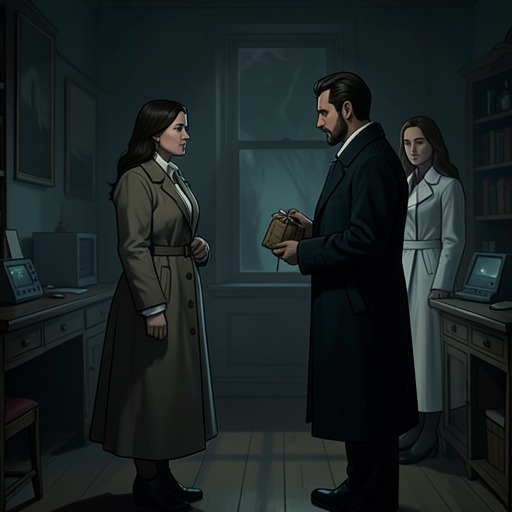
[Edward Hutchins](entity:character-recall-character-edward-hutchins-768cbd492d75), the English writer who has long offered Rosemary counsel and companionship, tells the couple that [The Bramford](entity:location-recall-location-the-bramford-725544ed4115) has a dark record. It has housed cannibals and [Adrian Marcato](entity:character-recall-character-adrian-marcato-0d106e3e3781), whose claims of witchcraft once provoked a violent mob; later scandals and unexplained deaths have given the building an ominous reputation.
Guy dismisses the history as coincidence, and Rosemary argues that every building must have its share of misfortune. Hutch still urges them to choose somewhere else, but their desire for the old apartment and its reasonable rent prevails.
Before the Woodhouses move in
A Troubling History
[The Bramford](entity:location-recall-location-the-bramford-725544ed4115)’s reputation reaches back through stories of the Trench sisters, [Adrian Marcato](entity:character-recall-character-adrian-marcato-0d106e3e3781), and other disturbing residents. Hutch has researched its history and believes the building has suffered an unusually high number of suicides and violent incidents.
The warning becomes more than an anecdote when he tells the Woodhouses that a dead infant was found in the basement and an elevator worker died recently. Guy insists the past cannot predict their future, while Rosemary takes comfort in the fact that the building belongs to a church.
August 9
The Lease Is Signed
Rosemary and Guy sign a two-year lease for apartment 7E at [The Bramford](entity:location-recall-location-the-bramford-725544ed4115). The previous tenant’s son sells them some furniture and furnishings, though the handsome rolltop desk Rosemary admired is not for sale.
While Guy works, Rosemary plans the renovation, chooses colors, and shops for furniture. The apartment’s large rooms and old-fashioned details become the setting for her hopes of domestic happiness and a future family.
August 20–27
Settling Into the Bramford
After the painters finish, Rosemary and Guy enter their empty apartment, admire its old fixtures, and picnic on the floor. They furnish it, decorate the rooms, and move in on August 27, delighted with their new home.
Hutch sends a telegram wishing that the building will change from a bad house to a good one under their names. Rosemary makes the nursery a temporary den, confident that the couple will soon have a child.
Late August and early September
Meeting the Neighbors
Rosemary quickly learns the names of the Bramford residents and makes the apartment her own, cooking, decorating, and attending to Guy’s needs as he auditions for work. She notices [Minnie Castevet](entity:character-recall-character-minnie-castevet-3bdd3afd15e6)’s loud voice through the wall but has not yet met Minnie or her husband, [Roman Castevet](entity:character-recall-character-roman-castevet-a2a1d800e473).
The Castevets’ foreign correspondence and late-night gatherings stand out amid the ordinary routines of the other tenants. Rosemary still thinks of Hutch’s warning only when the eerie basement brings the building’s history back to mind.
Mid-September
The Basement Encounter
In the laundry room Rosemary meets [Theresa Gionoffrio](entity:character-recall-character-theresa-gionoffrio-260cbf066f08), a young woman staying with the Castevets. Theresa says they rescued her from drug addiction, cared for her, and are helping her prepare for secretarial school; she speaks of them as the grandparents she never had.
Theresa wears a silver charm filled with a bitter-smelling substance that Minnie calls a good-luck gift. The two women agree to go to the basement laundry together, and Rosemary invites Theresa to visit her apartment.
Mid-September
Guy Meets Theresa
Theresa visits the Woodhouses and meets Guy, who is flattered that she remembers his television work. He jokes that she resembles Anna Maria Alberghetti, a comparison she has heard since childhood.
The encounter gives Rosemary a first glimpse of Theresa’s new life among the Castevets. Although Theresa praises her benefactors, her charm’s unpleasant odor and the building’s uneasy atmosphere leave small, unexplained impressions.
September 17
Theresa’s Fall
After a night out, Rosemary and Guy return to [The Bramford](entity:location-recall-location-the-bramford-725544ed4115) and find a crowd gathered around a car beneath the building. Theresa has fallen from a window and is dead on the sidewalk; a note in her handwriting confirms that she jumped.
Minnie and Roman arrive and react with shock, while Rosemary recalls Theresa’s happiness and her gratitude toward them. The Castevets say they knew little about Theresa’s family, although Rosemary remembers that Theresa mentioned a brother in the Navy.
The Monday after Theresa’s death
A New Neighborly Bond
Minnie visits Rosemary to thank her for telling the police that Theresa had felt grateful to the Castevets. She asks about Rosemary’s plans for children and admires the newly decorated apartment before inviting the Woodhouses to dinner.
Guy initially resists the invitation, fearing that the elderly couple will become intrusive. Rosemary’s sympathy for their bereavement wins him over, and they agree to visit, beginning a relationship that will soon become difficult to escape.
Late September
Dinner With the Castevets
At dinner in the Castevets’ apartment, Roman charms Guy with stories about famous actors and praises his talent, offering the recognition Guy craves. Minnie is blunt and inquisitive, while their oddly arranged living room leaves Rosemary feeling that she and Guy occupy separate worlds within the same visit.
Roman and Minnie mock organized religion, and Roman claims to have traveled everywhere and worked in many businesses. Guy enjoys the attention and accepts Roman’s invitation to return, while Rosemary is relieved to leave and unsettled by how quickly Guy has warmed to their hosts.
Late September
The Missed Period
After the dinner Rosemary realizes her period has begun, and her hopes of becoming pregnant are disappointed once again. She has been concealing from Guy how strongly she wants a baby, while he has been carefully avoiding the days when conception is most likely.
The disagreement reveals a gap between Rosemary’s private longing and Guy’s readiness to become a father. For now she continues to hope that he will change his mind.
Late September
Theresa’s Charm
Minnie and [Laura-Louise McBurney](entity:character-recall-character-laura-louise-mcburn-4954954786a9) visit Rosemary and give her Theresa’s silver filigree charm. Rosemary recognizes the object and remembers Theresa proudly showing it to her in the laundry room; Minnie tells her that the material inside is tannis root and insists she wear it.
Rosemary puts on the charm to avoid offending her visitors but later removes it because of its smell. Guy tells her that accepting a gift means she ought to use it, an early sign of his growing investment in the Castevets’ approval.
Late September
Guy’s Sudden Attentiveness
Guy grows preoccupied with the Castevets and his stalled acting career. Rosemary tries to reassure him, even as she feels increasingly alone and disappointed that he has not agreed to start a family.
The charm’s smell lingers in their bedroom, and the Castevets hold another gathering marked by strange singing and a recorder-like instrument. These details remain explainable to Rosemary, but they begin to accumulate around the couple’s private life.
October 4
The Pope’s Visit
On the day of Pope Paul’s visit to [New York City](entity:location-recall-location-new-york-city-65df0a129d4c), Rosemary is exhilarated by the public excitement and makes an elaborate dinner for Guy. Her sister calls from [Omaha](entity:location-recall-location-omaha-5b82225d1c78) after having an unexplained feeling that something has happened to Rosemary, but Rosemary assures her she is safe.
The call briefly reconnects Rosemary with the family she left behind. She is happy with Guy and newly hopeful about their future, unaware that the evening will become a decisive rupture in her trust and safety.
October 4 evening
The Drugged Dinner
Guy returns without the promised pumpkin pie, but Minnie soon brings chocolate mousse as a substitute. Rosemary tastes a chalky undertone and dislikes it; Guy pressures her to eat, framing her refusal as an unkind rejection of Minnie’s effort.
Rosemary pretends to finish the dessert but secretly hides most of it in her napkin. Soon she becomes dizzy and disoriented, and Guy carries her to bed, assuring her that sleep is all she needs.
Night of October 4–5
The Assault and Conception
While Rosemary is drugged and unable to understand what is happening, she experiences a feverish vision of a coven surrounding her. She sees Roman, Minnie, Guy, and others gathered around a bed, and feels herself being sexually assaulted by a monstrous presence.
The next morning Guy admits that he had intercourse with her while she was unconscious, explaining that he did not want to miss the night they had chosen to try for a baby. Rosemary finds scratches on her body and feels violated, though she tries to excuse Guy’s behavior as drunken thoughtlessness.
Early October
Guy Gets the Role
Guy learns that [Donald Baumgart](entity:character-recall-character-donald-baumgart-7078bff3e776) has suddenly gone blind and tried to kill himself. With Baumgart unable to perform, Guy is offered the part he had lost to him.
The opportunity promises to transform Guy’s career, but its timing troubles him. Rosemary sees his success alongside another man’s catastrophe and senses that Guy cannot take uncomplicated pleasure in the news.
Mid-October
A Promise of a Baby
After a period of distance, Guy apologizes for neglecting Rosemary and says he wants to have a child. Rosemary is moved by his apparent change of heart and believes their marriage is beginning again on more open terms.
Their plan to try during the next fertile days gives Rosemary a future to imagine: a baby, a successful acting career, and eventually a move to California. Guy’s promise also makes the events of the drugged night seem, for a time, like the start of a shared choice.
October 16–21
The Missed Meeting
Rosemary leaves for several days at [Hutch’s cabin near Brewster](entity:location-recall-location-brewster-hutch-f01baf6e5ae4), hoping solitude will help her understand her unhappiness with Guy. She moves between anger at his self-absorption and longing for him, eventually calling and deciding to return.
Guy tells her that his play has been postponed and that he has been offered a promising television pilot. When Rosemary comes home, Guy notices that her period is late, and the two joke about their bet over whether she is pregnant.
October 28–29
Pregnancy Confirmed
After her period fails to arrive, Rosemary visits [Dr. Hill](entity:character-recall-character-dr-hill-302c4b545f4e) and has a blood test. He calls the next day to confirm that she is pregnant, though a request for another blood sample leaves her with lingering unease.
Rosemary tells Guy the news and asks for a new beginning in their marriage. He agrees that he has been selfish and says he will be more open, then rushes to share the news with Minnie and Roman, whose importance in his life has become increasingly clear.
October 29
The Doctor Is Replaced
Minnie and Roman congratulate Rosemary and offer to connect her with their friend [Abraham Sapirstein](entity:character-recall-character-abraham-sapirstein-e8b4adc47aab), a prestigious obstetrician. Guy encourages the change, and Rosemary lets herself believe that the Castevets are simply helping them secure the best possible care.
Sapirstein takes Rosemary as a patient and advises her not to read pregnancy books or listen to friends. He rejects commercial vitamins in favor of a fresh herbal drink Minnie will prepare, while promising that Rosemary can call him at any time.
November
A Strange Daily Drink
Minnie begins bringing Rosemary a sour greenish drink each day, made with a raw egg, gelatin, and herbs including tannis root. Rosemary has little appetite and develops an aversion to salt, but Sapirstein reassures her that such changes are normal.
The daily routine gives the Castevets steady access to Rosemary and places her health under their influence. At first she accepts the drink as a natural alternative to pills and trusts that Sapirstein has approved it.
November into December
The Unrelenting Pain
Rosemary develops sharp abdominal pain and seeks reassurance from Sapirstein. He attributes it to normal pelvic expansion and tells her to take aspirin, dismissing her concern about an ectopic pregnancy as the product of reading too much.
The pain does not pass. It grows so severe and constant that Rosemary becomes exhausted, loses weight, and withdraws from her usual life, while Minnie and Guy repeat Sapirstein’s assurances that the condition is ordinary.
December
Hutch Sees the Change
[Edward Hutchins](entity:character-recall-character-edward-hutchins-768cbd492d75) visits and is alarmed by Rosemary’s gaunt appearance. She explains that she is pregnant and has been suffering from persistent pain, but she insists Sapirstein considers it a common complication.
Hutch questions the explanation and urges her to take her health seriously. Rosemary defends Sapirstein, partly because she trusts the doctor and partly because the Castevets have presented him as an unquestionable authority.
December
Hutch Falls Into a Coma
After Hutch leaves Rosemary’s apartment, he is found unconscious and enters a deep coma. Doctors cannot explain his condition, and Rosemary learns of it while waiting for him at the [Seagram Building](entity:location-recall-location-seagram-building-b5ada5b474da).
The sudden collapse frightens her, especially because Hutch had been investigating the Castevets’ unusual practices. Minnie encounters Rosemary on the street and escorts her home, where Rosemary drinks the daily herbal mixture despite her growing unease.
December through New Year’s
The Christmas Isolation
Rosemary’s pain continues through the holidays, and her life contracts to basic household tasks and long stretches at home. She spends time with the Castevets and their elderly circle, while Guy remains close to them and increasingly distant from Rosemary’s suffering.
Hutch remains comatose at [St. Vincent’s Hospital](entity:location-recall-location-st-vincent-s-hospita-18d6cf6db4e9). Rosemary visits him twice but does not know how to help, and the mystery surrounding his illness becomes one more worry she cannot resolve.
Early January
A Party Without the Castevets
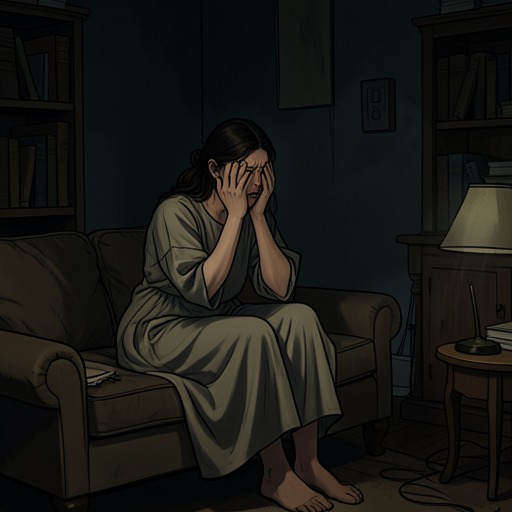
Rosemary discovers that she is chewing a raw chicken heart in the early morning and is horrified by her own behavior. She throws it away, vomits, and decides to reclaim some control by arranging a party for friends her own age.
She deliberately excludes Minnie and Roman, [Laura-Louise](entity:character-recall-character-laura-louise-9bf2c74ec727), and Sapirstein. The guest list marks a private attempt to reconnect with her former life and to test whether she can make choices without the Castevets’ supervision.
January 22
Rosemary’s January Party
Rosemary hosts a gathering for friends she has not seen in months, determined to enjoy her own home and resist Minnie’s offer to help. Her friends are alarmed by her thinness and by the pain she describes, which has lasted since November.
They urge her to get another medical opinion from [Dr. Hill](entity:character-recall-character-dr-hill-302c4b545f4e). Rosemary promises to do so, while Guy angrily denounces the women for interfering and insists that Sapirstein is the best doctor in [New York City](entity:location-recall-location-new-york-city-65df0a129d4c).
January 22, after the party
The Pain Suddenly Ends
After the guests leave, Rosemary tells Guy she intends to see [Dr. Hill](entity:character-recall-character-dr-hill-302c4b545f4e) and stop taking [Minnie’s drink](entity:object-recall-object-minnie-33f376f948d8). Their argument sharpens until, all at once, the constant pain disappears.
Rosemary fears that she has harmed the baby with the sherry in her homemade drink, but then feels the baby move for the first time. The movement brings immediate relief and joy, and Guy feels it too, though his reaction is tense and strangely guarded.
Late January and February
A Healthy Pregnancy Returns
With the pain gone, Rosemary sleeps, eats normally, and regains her health. She resumes preparing for the baby and drinks Minnie’s herbal mixture faithfully, convinced that the earlier illness was a temporary complication.
Sapirstein celebrates the baby’s movement and continues his close supervision. The improvement appears to confirm his assurances, though Rosemary’s recovery also binds her more firmly to the daily care system controlled by him and the Castevets.
February
The Play Opens
Guy’s play opens in Philadelphia after a difficult rehearsal period. The production itself receives poor reviews, but critics praise Guy’s performance and predict a successful career for him.
Rosemary is delighted by the recognition and begins preparing the nursery and planning for the birth. Guy’s rise gives him new professional momentum and leaves Rosemary increasingly focused on the baby and her coming motherhood.
February through May
Preparing for the Baby
Rosemary shops for maternity clothes and baby supplies, chooses nursery wallpaper, practices natural-childbirth exercises, and considers names. Guy’s success grows through a television series and new acting offers, while Sapirstein arranges a nurse and directs Rosemary’s care.
The couple’s future seems settled: they celebrate milestones, furnish the nursery, and discuss their child as Andrew or Jennifer. Rosemary’s confidence in the pregnancy deepens even as she remains dependent on the doctor and the Castevets.
June 7
Hutch’s Final Message
Hutch dies after months in a coma. At his memorial service, Grace Cardiff gives Rosemary a book Hutch insisted she should receive and relays his final message: the name is an anagram.
The book is [All Of Them Witches](entity:expression-recall-expression-all-of-them-witche-ae89d4a4fa5f), a study of witchcraft containing a chapter on [Adrian Marcato](entity:character-recall-character-adrian-marcato-0d106e3e3781). Rosemary recognizes Hutch’s underlining of tannis root and black candles, and begins to suspect that his warning about [The Bramford](entity:location-recall-location-the-bramford-725544ed4115) was more than an attempt to frighten her.
June 7
The Name Revealed
Rosemary works through the letters of Steven Marcato and discovers that they rearrange into [Roman Castevet](entity:character-recall-character-roman-castevet-a2a1d800e473). She realizes that Roman is the son of [Adrian Marcato](entity:character-recall-character-adrian-marcato-0d106e3e3781) and that his age and connection to [The Bramford](entity:location-recall-location-the-bramford-725544ed4115) fit the book’s account.
Guy accepts the identity but dismisses the possibility that Roman shares his father’s beliefs. Rosemary argues that the Castevets are part of a witchcraft group and vows to keep them away from the baby, while Guy treats her fears as irrational.
June 7–8
The Book Is Destroyed
Guy takes [All Of Them Witches](entity:expression-recall-expression-all-of-them-witche-ae89d4a4fa5f) away from Rosemary, saying that she is too upset to keep reading, and later throws the book out. She is angry that he has destroyed a book Hutch meant for her, but Guy apologizes without offering a convincing reason.
Rosemary also asks how Guy knew that Dr. Shand played a recorder during the Castevets’ gatherings. Guy says Shand told him, but the answer does not settle Rosemary’s suspicions.
Mid-June
The Castevets Prepare to Leave
Rosemary tells [Abraham Sapirstein](entity:character-recall-character-abraham-sapirstein-e8b4adc47aab) that she has learned Roman’s identity and no longer wants anything to do with the Castevets. She asks whether Minnie could have put something harmful in the drinks or cakes; Sapirstein laughs at the idea and offers pills instead.
He claims Roman is gravely ill and that the couple plan to travel to Europe. Rosemary agrees to behave warmly toward them until their departure, believing that their absence will protect the baby.
Saturday before June 25
A Farewell Gathering
At [Laura-Louise](entity:character-recall-character-laura-louise-9bf2c74ec727)’s bon voyage gathering, Roman and Minnie announce their European itinerary. Rosemary studies the guests, trying to reconcile their ordinary conversation with her belief that they form a coven.
Guy appears at ease among them, and Rosemary notices how well he knows their rituals and habits. The gathering weakens her resolve to regard the group as harmless, but she still cannot prove what they intend.
June 19
The Castevets Depart
Guy helps Minnie and Roman take their luggage to a taxi bound for the airport. Rosemary kisses them goodbye and finds herself genuinely saddened by their departure, despite her suspicions.
Afterward she discovers that Guy has thrown away Hutch’s book. She also learns from Guy that Dr. Shand had explained the recorder, but the new details do not resolve her unease about Guy’s closeness to the Castevets.
June 24
The Ticket Discrepancy
At Tiffany’s Rosemary encounters Dominick Pozzo, who denies ever giving Guy tickets to The Fantasticks. The contradiction makes her reconsider a night when Guy sent her out and later made unusually intense love to her while the Castevets held a strange gathering.
As she walks through the city, memories accumulate into a theory: Guy may have joined the coven, and his career may have been advanced through harm done to [Donald Baumgart](entity:character-recall-character-donald-baumgart-7078bff3e776). She begins to suspect that the baby is the price Guy has agreed to pay.
June 24
A Call to Baumgart
Rosemary calls [Donald Baumgart](entity:character-recall-character-donald-baumgart-7078bff3e776) to ask whether his blindness has improved. Baumgart says it has not, but remembers that Guy visited him after the casting decision and that they traded ties as a friendly gesture.
The exchange gives Rosemary no proof that a spell was cast, and it complicates her theory that Guy stole an object for witchcraft. Still, she remains convinced that the career opportunity and the baby are linked, and she decides she must seek help before the birth.
June 24
Rosemary Leaves the Charm
Rosemary removes the tannis-root charm and drops it into a street sewer, rejecting the object that has been part of her daily life since Minnie gave it to her. She sees its foul smell as evidence that the substance may not be the harmless herb she was told it was.
At home she tries to reason away her fears but cannot explain Guy’s secrecy, his closeness to the Castevets, or the strange events surrounding Hutch and Baumgart. With labor approaching, she calls Actors’ Equity for Baumgart’s number and prepares to act alone if necessary.
June 24 afternoon
The Nurse’s Scent
Rosemary goes to [Abraham Sapirstein](entity:character-recall-character-abraham-sapirstein-e8b4adc47aab)’s office carrying a suitcase and asks to speak with him. While she waits, his receptionist mentions that Sapirstein sometimes carries the same powerful, unpleasant smell Rosemary associated with her charm.
The remark convinces Rosemary that Sapirstein may be involved with the Castevets. She leaves the office and calls [Dr. Hill](entity:character-recall-character-dr-hill-302c4b545f4e), asking him to deliver her baby and get her into a hospital before the others can stop her.
June 24 evening
Rosemary Seeks Dr. Hill
[Dr. Hill](entity:character-recall-character-dr-hill-302c4b545f4e) agrees to meet Rosemary at his office. She tells him about Roman’s identity, Hutch’s book, the herbal drinks, her long illness, the suspicious pregnancy care, and her fear that the group wants her baby.
Dr. Hill takes her seriously and begins arranging a hospital admission. Rosemary believes she has finally found someone who will protect her and the child, but her relief lasts only until she falls asleep in his examining room.
June 24 evening
The Betrayal at the Office
Rosemary wakes to find Guy and Sapirstein beside her. They tell her to come quietly and threaten that further accusations of witchcraft could lead to a mental hospital; [Dr. Hill](entity:character-recall-character-dr-hill-302c4b545f4e) has given up her confidence and helped them locate her.
They take Rosemary back to [The Bramford](entity:location-recall-location-the-bramford-725544ed4115), claiming that she and the baby will be safe. The journey confirms that even the doctor she trusted has become part of the system controlling her, leaving her isolated and heavily pregnant.
June 24 late evening
The Failed Escape
At [The Bramford](entity:location-recall-location-the-bramford-725544ed4115), Rosemary spills the contents of her handbag near the elevator and uses the distraction to escape in the elevator car. She reaches her apartment and locks herself inside, then tries and fails to contact her brother and friends.
Guy, Sapirstein, and members of the Castevets’ circle enter the apartment. When Rosemary resists, they restrain her and Sapirstein prepares a sedative, but he realizes she is already in labor.
June 24–25
The Forced Home Birth
The coven keeps Rosemary in her apartment instead of taking her to the hospital she expected. Sapirstein drugs her while the others hold her down, and labor proceeds through a haze of injections, pain, and fragmented awareness.
Guy assures her that everything will be all right, but she recognizes that the birth is not the natural childbirth she planned. Her fear for the baby deepens as she loses control of her body and cannot see what is happening.
June 25
The Baby Is Declared Dead
After the birth, Rosemary wakes and asks to see her baby. Guy and Sapirstein tell her that the child died because it was badly positioned and that there was no time to reach a hospital.
Rosemary refuses to believe them and accuses them of taking the baby. Sapirstein sedates her, and Guy describes her accusations as a bout of pregnancy-related madness, attempting to make her doubt her own judgment.
Two or three weeks after the birth
The Baby’s Cry
While recovering in bed, Rosemary hears a baby crying and asks whether anyone else can hear it. The women tending her deny the sound, but Guy later admits that new tenants upstairs have a baby.
Rosemary becomes convinced that the crying comes from inside [The Bramford](entity:location-recall-location-the-bramford-725544ed4115), not from above. She notices that the sound often begins shortly before the women take away the milk she pumps from her breasts.
Weeks after the birth
The Milk Is Taken Away
Rosemary asks what happens to the milk collected with the breast pump and measuring cup. [Laura-Louise](entity:character-recall-character-laura-louise-9bf2c74ec727) says it is thrown away, but she reacts sharply when Rosemary tries to put a spoon into the cup.
That response strengthens Rosemary’s belief that the milk is being used to feed the baby she was told had died. She secretly stops swallowing the pills Sapirstein provides, hiding them beneath the mattress and gradually regaining her strength.
Near the end of July
Leah Is Drugged
When Leah Fountain stays with Rosemary, Rosemary waits until they are alone and slips her accumulated pills into Leah’s coffee. She needs the caretaker asleep long enough to search the apartment and find the child.
Leah falls asleep in the bedroom as Rosemary watches the film with her. Rosemary takes a knife from the kitchen and prepares to investigate the route by which the coven entered her room during labor.
Near the end of July
The Hidden Passage
Rosemary empties the linen closet and discovers that a panel in its back swings inward. Beyond it lies a second closet connected by a hidden passage to the Castevets’ apartment.
She understands how the group could enter her apartment despite the chained front door. The concealed route also recalls the earlier dream in which she was carried through the closet, making the dream seem like a memory of the drugged ceremony rather than an invention.
Near the end of July
The Black Bassinet
Rosemary follows the passage into the Castevets’ apartment, where she finds a black bassinet beneath an upside-down crucifix. The familiar paintings and layout revive details from the nightmare she had during the drugged conception.
She realizes that the baby is there and that the people she has feared are gathered nearby. Holding a carving knife, she steps into the living room and confronts the group.
Near the ending
The Child’s Golden Eyes
Rosemary turns the bassinet toward herself and sees a living infant with bright yellow eyes and vertical pupils. Roman declares that the child has [Satan](entity:character-recall-character-satan-835177cd068e)’s eyes and proclaims Satan his father, while the coven celebrates the birth as the beginning of a new era.
Rosemary is horrified and accuses the group of changing the baby, but Roman explains that Satan begot a son through a mortal woman. The child’s unusual eyes make the nightmare’s most impossible elements undeniable.
Near the ending
The Coven Claims Its Child
Minnie tells Rosemary that the child was chosen for her by [Satan](entity:character-recall-character-satan-835177cd068e) and that the events leading the Woodhouses to [The Bramford](entity:location-recall-location-the-bramford-725544ed4115) were arranged to make her his mother. The group hails the child as Adrian, while Rosemary struggles to accept what she sees and hears.
Roman urges her to become the baby’s mother and promises she need not join the coven. Rosemary rejects the group’s triumphal language and insists that killing would be wrong, even as she considers whether the child should be destroyed to prevent what the coven intends.
Near the ending
Rosemary Chooses the Child
Rosemary approaches the bassinet again and sees the baby’s tiny claws and horns, but she also sees his small chin and orange-red hair. She tells him he has a nursery waiting in her apartment and explains that she is the mother whose milk has fed him.
She decides she cannot kill him or abandon him because he is her child, whatever his father may be. When the coven calls him Adrian Steven, Rosemary insists on naming him [Andrew John Woodhouse](entity:character-recall-character-andrew-john-woodhou-9981abf35147) and refuses to let them dictate everything about his clothing and care.
The closing scene
A Fragile Claim of Motherhood
Roman allows Rosemary to rock the bassinet, and the baby quiets as she speaks to him. She loosens his gown and blanket, studies his strange eyes, and tells him that she will not hurt him.
The coven gathers to watch, greeting her as the mother of Adrian. Rosemary answers that his name is Andrew, beginning a fragile, defiant claim to motherhood within the very group that has stolen her choices and celebrated the child as its own.